
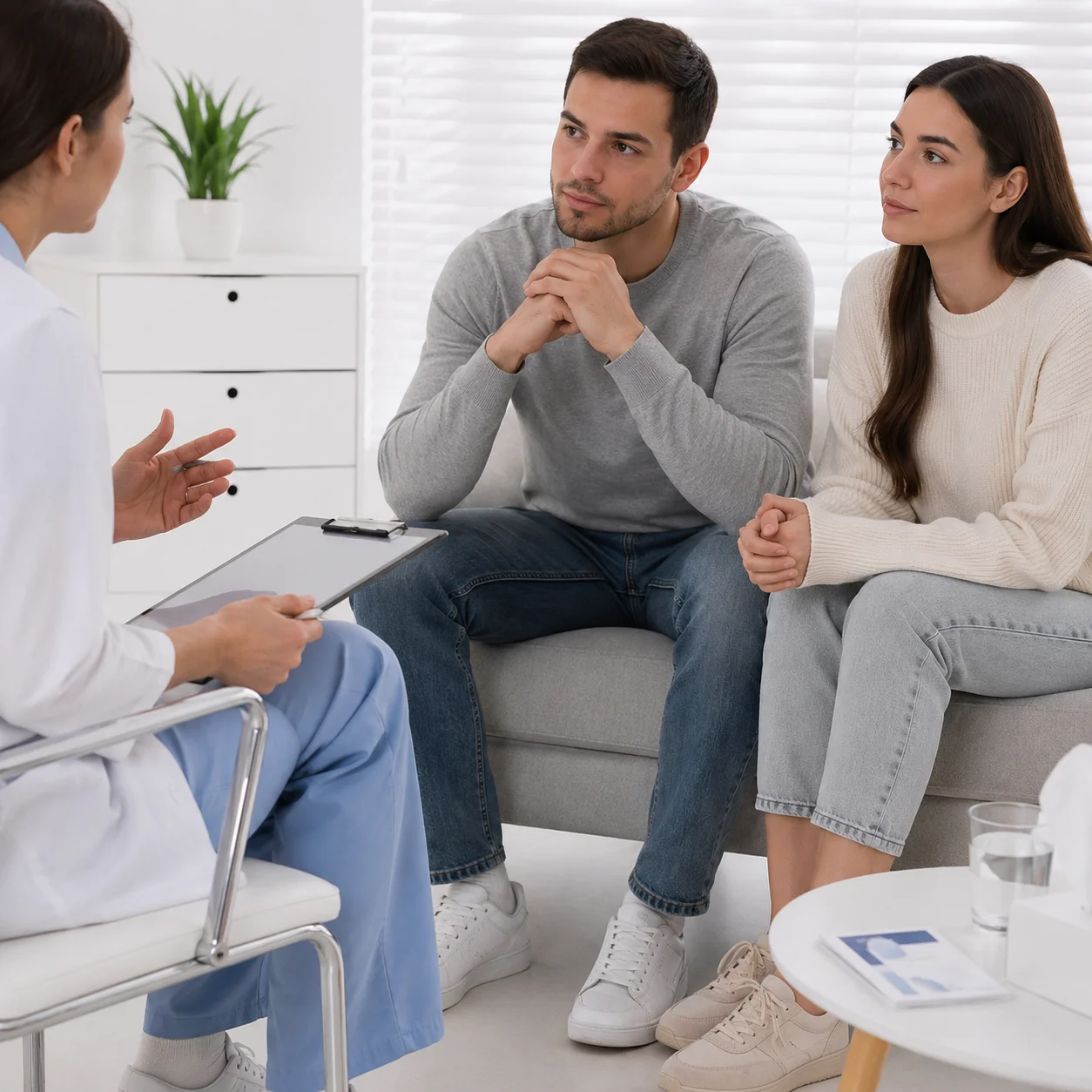

In this blog post, we are going to debunk or confirm some of the most common myths surrounding Sexually Transmitted Infections (STIs/STDs).
AIDS is the same as HIV. FALSE
HIV (Human Immunodeficiency Virus) is a virus that, if left untreated, weakens the immune system after infecting a person. However, this is a slow and chronic process, and in people receiving treatment or during the early stages of infection, the immune system may not show any noticeable impairment.
AIDS (Acquired Immunodeficiency Syndrome) occurs when the immune system becomes so weakened that it can no longer effectively fight off other illnesses. This happens when certain immune cell counts become critically low and/or when specific illnesses associated with advanced HIV infection are diagnosed.
If a person is on treatment and has an undetectable HIV viral load, their immune system will not be compromised and they will never develop AIDS.
Oral sex does not transmit STIs. FALSE
This is one of the basic testing packages at Open House. While it is true that many infections are primarily associated with penetrative sex, we should never overlook syphilis, chlamydia, and gonorrhoea in oral sex.
Because oral sex is often practised without protection, it is one of the main routes of transmission for these infections that we see in our clinics.
Sex is only risky if the other person is a stranger. FALSE
Having an STI is not something that only happens in another universe. Some studies estimate that 1 in 10 adults may have had a curable STI at some point during their sexual life.
Therefore, even if we know someone personally, we do not know everything about their sexual practices and that makes it a gamble. So even if you know your sexual partners, if you engage in unprotected sex, it is advisable to get tested regularly. Since these infections can be carried and transmitted without symptoms, testing is the only way to be certain you do not have an STI.
UNDETECTABLE means UNTRANSMISSIBLE. TRUE
As mentioned earlier, if someone with HIV is receiving treatment, they will usually achieve an undetectable viral load (which is monitored through regular check-ups).
When someone is undetectable, they cannot transmit the virus to others. Therefore, they are not infectious, even during unprotected sex.
I can catch HIV by living with someone who has it or by sharing a glass. FALSE
If there is no sexual contact and no blood-to-mucosa contact, this is IMPOSSIBLE. HIV is not transmitted through saliva or by sharing food or drinks, as saliva and gastric juices prevent the virus from entering the bloodstream.
In other words, you can live safely and normally with someone who has HIV. We need to eliminate this stigma from our minds.
I don’t have anything because I don’t have symptoms. FALSE
Many of our patients do not want to get tested after having unprotected sex because they “feel fine” or “haven’t noticed anything”, but this is a mistake. Virtually all STIs can go unnoticed, either causing no symptoms at all or only very mild ones.
That is why it is extremely important to get tested regularly according to the level of sexual risk you may have been exposed to.
PrEP protects against all STIs. FALSE
When we talk about PrEP, we are referring to HIV Pre-Exposure Prophylaxis. It only protects against HIV infection. The risks of other STIs such as chlamydia, gonorrhoea, or syphilis remain exactly the same.
In fact, at Open House we have noticed an increase in other STIs among people taking PrEP because, feeling protected against HIV, they may stop using condoms, which increases the transmission of other infections.
I can catch an STI from sitting on a public toilet seat. FALSE
STIs are transmitted through contact between mucous membranes or between bodily fluids and mucous membranes. The skin on your thighs is not an entry point, and these infections do not survive on inert surfaces.
There are no documented cases of this happening. If it were true, given how much we enjoy bars and nightlife in Spain, we would all be infected.
I had unprotected sex or the condom broke, there is a treatment that can stop me catching HIV. TRUE
It is called PEP (Post-Exposure Prophylaxis), and it is a treatment administered in hospitals.
The first 6 hours are crucial for starting treatment, although it can still be taken up to 72 hours after exposure.
If someone masturbated me, I need to get tested. FALSE
There is no real risk associated with this type of contact. Transmission would require recently infected bodily fluids and direct contact with mucous membranes or open wounds.
This is extremely unlikely, which is why STI testing is not recommended after masturbation alone unless symptoms are present. No clinical guideline recommends testing in this situation.
Getting tested in this context does not improve your health — it only fuels anxiety.
All places offering STI testing are the same. FALSE
Unfortunately, not all clinics apply the same clinical and ethical standards that we follow at Open House when recommending or carrying out STI testing.
In many cases, testing window periods are not respected, or patients are offered numerous unnecessary tests, creating a false sense of security. We have also found that some centres provide tests with very low sensitivity and high false-positive rates, such as blood tests for chlamydia, which do not produce reliable results.
When it comes to sexual health, it is always worth seeking out clinics that apply the strictest possible clinical protocols and provide transparent information to patients.
At Open House, we have nearly 20 years of experience, work with highly qualified medical professionals, and use the latest-generation tests, offering the most accurate and reliable diagnostics on the market. In just 2 hours, we can carry out a complete screening and help put your mind at ease during what can be a very stressful time. Call us for more information or to book an appointment.
Madrid Clinic Valencia Clinic Málaga Medical Center
Dr. Julieta Domingorena Córdoba